
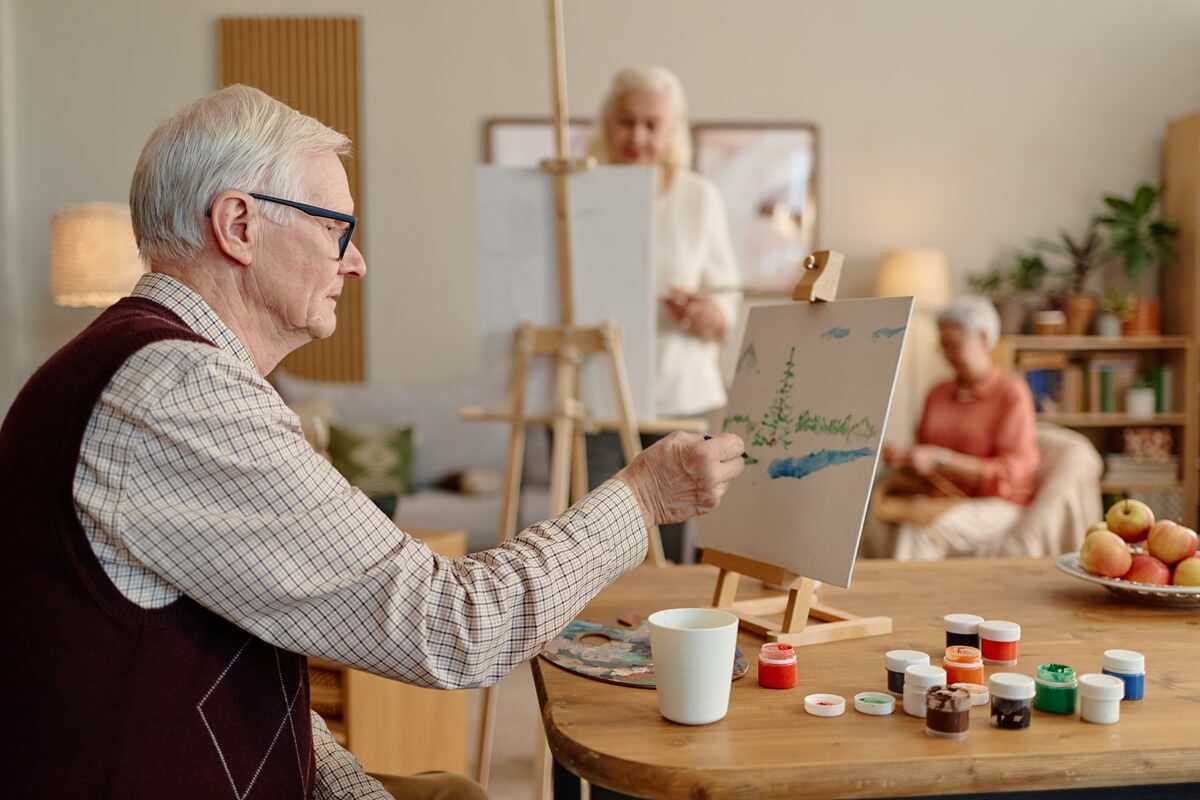
Creativity in later years is never about coming up with something extraordinary; its essence lies in creating something that soothes the soul. Seniors take up creative pursuits for fun at first, only to find they become a daily essential that benefits them in many ways. It fosters novelty, renewed vitality, and, most importantly, a sense of purpose and continuity for someone who struggles to find passion in their later years.
For instance, take the example of Sara, a 67-year-old senior living in the community who didn’t have much to do in her idle time. She thought she wasn’t creative, only to find out she could actually write poems when asked to do so in a creative session.
Arts and crafts for seniors isn’t just a way to age creatively. There are many benefits of creativity and creative hobbies for older adults. From supporting cognitive health and enhancing emotional well-being to improving physical function and fostering better social connection, creative activities for seniors offer many benefits.
Why Creativity Matters At Every Age
Just as there’s no limit to learning, creativity has no age limit, either. Creative programs and hobbies are some of the best therapeutic tools seniors can pursue in their later years. Creative aging isn’t just a fun activity; it’s a powerful tool seniors can use to combat age-related challenges. It helps stimulate brain networks, lower loneliness and stress, and support physical mobility and daily independence.
Here’s more on why creativity matters for aging adults at every stage of life.
Self-Expression
Self-expression can take any form—from writing a poem to painting a canvas to doing photography. For seniors, it plays a vital role throughout older adulthood. Whether someone is newly retired or navigating cognitive changes, creative outlets can help them turn transitional moments into opportunities for growth and meaning. Self-expression through creativity supports brain health, emotional resilience, and social connection for seniors. Engaging in creative tasks like painting, music, writing, and crafting is linked to better cognitive function and lower rates of depression, as creating art or music helps older adults process grief, stress, and major life changes, even when emotions feel hard to put into words.
Identity
After retirement, seniors leave behind old connections and lose touch with many of their old friends. This reduction in social ties affects their sense of self, as identifying with a title or role can feel difficult. Engaging in creative expression, whether it’s making art, playing music, or simply building a craft, helps seniors foster a sense of identity. Using creative means, seniors can reflect on past experiences and weave them into a meaningful, continuous life narrative. It helps older adults live the kind of vibrant life they aspire to.
Purpose
The benefits of creativity for older adults extend beyond benefiting brain health. Their golden years can be a time of self-discovery, and they can rediscover their purpose. Post-retirement seniors have plenty of time for themselves but may not be aware of the opportunities available to help them find meaning in daily activities. Opting for creative routines turns open time into active, meaningful engagement when work roles or daily schedules shift. Adaptive activities like painting, music, and writing let residents focus on what they can do and express themselves beyond words.
Benefits: Mind, Mood, And Connection
Creative pursuits are never age-related. A senior can take them on at any stage of their magnificent aging journey. They offer several key benefits, including strengthened brain health, enhanced mood, and better social connections. Regular creative engagement, from painting and music to gardening, writing, or crafting, offers them measurable benefits regardless of their prior skill level.
A peer-reviewed research paper published in the academic journal Frontiers in Psychology shows that creative arts therapies such as visual arts, music, creative dance, and therapeutic writing are among the most effective non-pharmacological tools seniors can use to embrace healthy aging and prevent psychological distress.
Mind: Cognitive Health And Resilience
Every senior experiences cognitive decline as they age. Maintaining cognitive health and resilience takes much more than just eating right and working out. Creative pursuits help seniors strengthen their neural pathways and support their memory, attention, and problem-solving. Regularly exercising helps slow cognitive decline and supports overall brain function. For seniors with dementia or memory loss, familiar music and colors help unlock memories, spark engagement, and calm agitation.
Mood: Emotional Well-Being And Purpose
Living purposefully takes much more than staying engaged in an activity. To feel at their best, seniors need to feel better emotionally and carry a restorative sense of calm. Creative outlets, including art, music, and journaling, help with this. All of these serve as powerful emotional outlets that can help process grief, ease life transitions, and ease feelings that are hard to put into words. Whether it’s finishing a project or trying out a new craft, it all helps seniors build self-esteem and reinforce a sense of purpose beyond their past careers.
Connection: Social Bonds And Belonging
Artistic activities are one of the best ways seniors can build meaningful connections and embrace healthy social bonds. Group classes, book or craft circles, and community workshops create natural opportunities for seniors to meet peers and combat the feelings of isolation. Collaborating on creative projects helps older adults form new friendships, rediscover old interests, and stay actively engaged with others.
Creative Activity Ideas For Older Adults
There isn’t a single way for seniors to stay engaged while pursuing creative endeavors. They get numerous opportunities to make their life more vibrant and meaningful. Creative activities can enrich older adults’ lives and make them more fulfilling.
Here are some creative activity ideas that seniors can take on in their later years.
Writing
Writing is one of the best creative activities older adults can take on in their later years. They can do memory & memoir prompts, poetry & wordplay, and even take part in group exercises based solely on writing. Possibilities include picking a meaningful object or a photo, writing its history, and explaining why the individual kept it. They can write about a major historical date related to their life and describe what daily life felt like back then. They can pick a random topic and write poems about it. In groups, they can do group pass-alongs, where they share prompts and take turns adding lines.
Music
Music is much more than just beats and compositions. It reaches and impacts the parts of the brain that words alone can’t. Creative music activities older adults can engage in include lyric songwriting, playing rhythm instruments, music bingo, and painting to music. The benefits? It helps boost mood, spark memories, and foster social connection.
Crafts
Some worthwhile craft ideas for seniors include creating custom bookmarks, adult coloring, and origami. They can also do hands-on & decorative projects, including painting rocks or terracotta pots, creating collages & scrapbooking, and making wreaths & floral arrangements. These creative crafts support fine motor skills, mental engagement, and social connection while easily adapting to different dexterity and vision levels.
Painting
Painting is much more than an activity where you paint across a canvas. Beyond being a great tool for self-expression, it supports cognitive stimulation, emotional expression, and fine motor skills. Seniors can do texture tool painting, paint to familiar music, or simple Q-tip or dot painting. They can also do nature-inspired projects, including painting household objects or life memories to spark conversation and personal stories. They can also decorate terracotta pots, wooden birdhouses, or picture frames with acrylic paint and sealants.
Photography
Seniors don’t need a professional camera to try their hand at photography. They can do it with a phone or tablet, too. They can photograph meaningful items at their residence, including a mug, quilt, tool, or musical instrument. They can capture birds, clouds, or simple neighborhood scenes from their window. They can visit botanical gardens and parks with peers to shoot different settings and scenery and even print the best captures.
Storytelling
It is one of the best socialization ideas for seniors. It blends personal reminiscence with imaginative play to spark connection, preserve memories, and keep minds engaged. An older adult can host a themed group chat around a specific decade or other topic, then form reminiscence circles.
Adapting For Arthritis Or Low Vision
Older adults with arthritis or visibility issues can also stay creatively engaged by adopting low-strain, high-contrast, or tactile activities and using simple adaptive tools. To paint, they can use wide or foam-padded brush handles and use glue sticks or tape runners instead of squeezing bottles. Low-vision creative activities to try include tactile crafts, like trying finger weaving, clay bead making, or textured leaf printing. High-contrast painting and drawing ideas include using bold, contrasting colors, thick markers or brushes, and bright task lighting.
FAQ
1. What creative activities are suitable for seniors with limited mobility?
Limited mobility doesn’t have to prevent seniors from engaging in creative activities. They can do seated, low-impact creative activities—such as painting, scrapbooking, knitting, storytelling, and container gardening—that help them stay mentally engaged, reduce stress, and connect with others.
2. Can older adults learn creative skills later in life?
Yes, older adults can learn creative skills later in life. Aging does not hinder their ability to learn something new. In fact, research shows the brain remains capable of building new neural connections well into older age. Older adults also bring unique strengths—such as lifelong knowledge, rich memories, and creative problem-solving—that support creative expression.
3. What are some inexpensive creative hobbies for seniors?
Some of the most inexpensive creative hobbies for seniors include journaling, knitting or crocheting, watercolor painting, baking from scratch, and regrowing kitchen scraps. Most of these require basic household items or low-cost supplies you can buy at discount stores.
4. How often should older adults engage in creative activities?
In general, older adults benefit most from weekly creative activities, aiming for roughly 2 hours a week overall, or short sessions of 10 to 30 minutes several times a week. More frequent engagement tends to bring stronger physical, cognitive, and emotional benefits than occasional participation.
5. What is the difference between art therapy and recreational creative activities?
The core difference is purpose and intent. Art therapy targets specific mental health, emotional, or trauma-related treatments, while recreational creative activities are driven by leisure, fun, stress relief, socialization, or artistic skill.
6. How can seniors stay creative if they have arthritis or vision problems?
Seniors with arthritis or vision problems can stay creative by choosing accessible hobbies, using adaptive tools, and focusing on sensory or low-strain activities.
Summer Breeze Senior Living—Enriching Lives And Making Seniors’ Golden Years Special
At Summer Breeze Senior Living, we understand how vital creative activities are for aging seniors. All creative activities, whether they’re arts & crafts, writing and music, or some other kind of creative expression, offer transformative benefits that extend beyond greater enthusiasm for life. Creativity for seniors in their later years isn’t just about keeping themselves busy; it’s about finding fulfillment and thriving in everyday life.
Creativity has transformative and restorative power that helps seniors connect, grow, and evolve.
Families seeking a trusted senior living community in Savannah can contact us at Summer Breeze Senior Living. The numerous activities we offer aren’t just part of residents’ daily lives; they’re designed to help residents explore their passions and adopt new hobbies as they age. Music and arts and crafts are just a few of the enjoyable activities we offer to make residents’ later years special.
With a daily monitored emergency response system, scheduled transportation services, medication management program, on-site physical, speech, and occupational therapy services, and scenic walking trails and outdoor activities, we make residents’ later years really special.
To learn more about our programs and on-site amenities, you can schedule a tour of our premier senior living community, which offers three care options—independent living, assisted living, and memory care—under one roof.
Share This Story, Choose Your Platform!
About the Author: Sarah Collins


